Search in Classifieds
Search in Groups
Search in Polls
Search in Members
Search in Members
Search in News
Search in Polls
Search in Businesses
Search in Contests
Search in Events
Search in Music Albums
Search in Music Songs
Search in Quotes
Search in Site Team
Search in Jobs
Search in Products
Search in Products
6 minutes, 52 seconds
-64 Views 0 Comments 0 Likes 0 Reviews
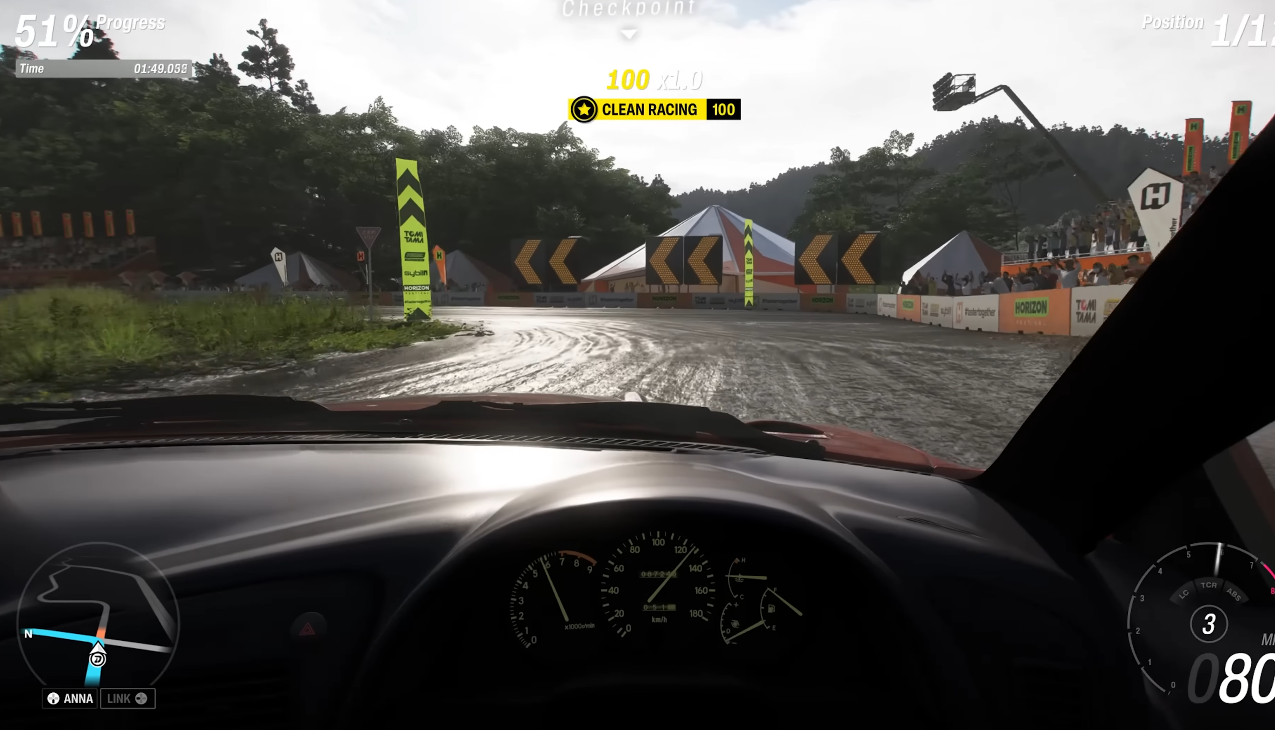
Ever since Playground Games finally dropped the curtain on Forza Horizon 6, players have been flooding the dense streets of Tokyo and, more importantly, the technical mountain passes of the Japanese Alps. With the addition of the dedicated "Touge Battle" and "Time Attack" modes, the franchise has shifted its focus from the wide-open Mexican deserts of FH5 to tight, rhythm-focused switchbacks inspired by real-life icons like Mt. Haruna (the legendary Initial D mountain) and Hakone.
On these narrow roads, raw horsepower takes a backseat to weight distribution, lateral Gs, and mid-corner stability. Blasting down Gunma Route 33 with a 1,000-horsepower hypercar will usually just end with you embedded in a guardrail. To dominate the downhill and uphill battles, you need a weapon built for precision.
Based on early testing of the launch meta, these are the best cars for conquering the mountain passes in Forza Horizon 6, analyzed by the numbers.
The GR86 is given to you early in the game after unlocking your first festival wristband, and it is arguably the best platform for C-class and B-class mountain racing.
The Numbers: In its stock form, the car sits at a modest 228 horsepower and weighs around 2,800 lbs (1,270 kg).
Why it works: It features a near-perfect 53:47 front-to-rear weight distribution. When built to the top of A-Class (around 400 hp via a centrifugal supercharger upgrade and weight reduction down to 2,500 lbs), its nimble chassis allows you to carry incredible rolling speed through the hairpins of Hakone. You can throw it into a corner 5–10 mph faster than heavier sports cars without experiencing severe understeer.
You cannot talk about Japanese touge without mentioning the sequential twin-turbo rotary legend. The FD RX-7 remains a masterclass in automotive packaging.
The Numbers: Stock weight is an incredibly low 2,822 lbs (1,280 kg) with 252 horsepower.
Why it works: Thanks to the lightweight rotary engine sitting entirely behind the front axle (a front mid-engine layout), the RX-7 has a true 50:50 balance. Optimized for A-class or low S1-class, keeping the rotary engine or swapping in a single-turbo setup pushing 450 horsepower creates an absolute monster for the uphill sections of Mt. Haruna. Its transition from left to right during tight S-curves is immediate and crisp, requiring minimal steering correction.
When the seasons shift in FH6 and you find yourself fighting for traction on the damp, leaf-covered roads of the Bandai-Azuma skyline—or heading up into the snowy corridors of Yuki no Otani—rear-wheel drive becomes a handful. That is where the Tommi Mäkinen Edition Evo VI steps in.
The Numbers: Pushing 276 horsepower (officially, though closer to 300 in reality) with a sophisticated four-wheel-drive system.
Why it works: While it is heavier than the RX-7 at roughly 3,000 lbs (1,360 kg), the magic lies in its mechanical grip. By upgrading the differential settings to send 60% of the torque to the rear wheels and softening the anti-roll bars, the Evo VI claws through tight corners. It mitigates the traditional AWD understeer, allowing you to smash the throttle out of hairpins much earlier than your competitors.
To make any car viable on the FH6 passes, you need to throw out your high-speed highway tunes. The goal here is mechanical grip and acceleration.
| Tuning Parameter | Direction | Why It Matters |
| Final Drive Ratio | Shorten (Move toward Acceleration) | You rarely top 130 mph on these roads; you need to blast out of 2nd and 3rd gear corners. |
| Spring Stiffness | Softer (Decrease by 10-15%) | Mountain passes have bumps and elevation drops. Stiff springs cause the car to bounce and lose contact with the tarmac. |
| Differential (RWD) | Lower Deceleration (10-15%) | Allows the car to rotate more freely into the corner when you lift off the throttle or trail-brake. |
Building the ultimate garage for these mountain runs can get expensive quickly, especially when you start factoring in top-tier engine swaps, race-grade tires, and adjustable suspension components. If you find yourself short on credits or looking to skip the wheelspin grind to get your favorite JDM platforms fully spec'd out right away, you can visit third-party marketplaces like U4N. It is a reliable platform where players go to buy FH6 items, premium car packs, and credits safely to bypass the early-game monetary restrictions. This allows you to immediately dive into fine-tuning high-tier S1 and S2 builds without spending dozens of hours grinding standard circuit races.
If you want the purest, most rewarding grip-driving experience on the new maps, stick to the Mazda RX-7 FD. It rewards precision and punishes sloppy inputs, making a perfect downhill run feel incredibly earned. If you want to shut your brain off and set blindingly fast, consistent times regardless of rain or snow, the Mitsubishi Evo VI is your best bet. Grab your platform of choice, soften up that suspension, and go claim the mountain.
We are a close community to help to meet and greet new people.
We are a secure community with 5000+ active members who help you with your queries, post new updates and grow your network.

Share this page with your family and friends.