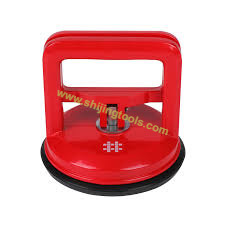
Moving glass panels, stone slabs, tiles, metal sheets, and other smooth materials often requires a handling method that keeps the workpiece stable without relying on conventional clamping. A Heavy Duty Vacuum Suction Cup creates a temporary connection through a vacuum seal, allowing an operator to hold or reposition a workpiece through controlled contact. The actual result depends on several details, including the contact surface, sealing material, pumping method, structural strength, and handling design. SHIJING has developed a range of suction cup products for handling and installation applications, making shijingtools a useful source for buyers who want to understand how different configurations relate to practical working conditions. So, which features deserve attention before a suction cup becomes part of a daily handling process?
The sealing surface is one of the first things worth examining because vacuum holding begins at the point where the rubber pad meets the workpiece. A pad needs to maintain contact around its perimeter while accommodating the characteristics of the material being handled. Glass and polished stone usually provide a relatively even contact area, while certain boards, coated materials, or surfaces with slight irregularities can create different sealing conditions. The composition of the pad also affects flexibility, temperature resistance, elasticity, and resistance to repeated mechanical stress. SHIJING's published technical material discusses silicone, natural rubber, and thermoplastic rubber as possible material choices, each having different characteristics when used in suction applications.
The physical dimensions of the pad also deserve careful attention. A wider contact area can provide a useful interface for larger workpieces, but size alone does not determine whether a tool is appropriate. The relationship between pad geometry, surface condition, load direction, and vacuum level has to be considered together. For example, a suction cup used to reposition a large glass panel may have different requirements from one intended for holding a smaller tile during installation. SHIJING's product range includes several configurations, including models designed with broad rubber contact areas for demanding handling tasks.
Another feature worth considering is the way vacuum pressure is created and monitored. Traditional manual designs use a lever or pump mechanism, while certain electric models incorporate an automatic air pump. A pressure gauge or digital display can also provide useful information during operation because the operator can observe the vacuum condition rather than relying solely on physical sensation. SHIJING's current suction cup range includes manual products, pressure-gauge configurations, automatic air pump models, and electric versions with digital displays. These different approaches allow users to consider the working environment, operating frequency, and preferred handling method when selecting a tool.
Pressure monitoring becomes especially relevant when the workpiece is expensive, fragile, or difficult to reposition after movement begins. A visible pressure reading does not replace correct operation, but it can give the operator an additional reference during preparation and handling. Before lifting, the contact surface should be clean, the sealing pad should be inspected, and the cup should be positioned evenly. SHIJING's own guidance emphasizes checking the surface, examining the rubber pad, activating the vacuum correctly, and confirming that the connection remains stable before lifting.
The handle and overall structure are also part of the user experience. A suction cup may generate sufficient holding force while still being inconvenient if its grip position does not suit the intended movement. When workers need to rotate, align, carry, or reposition a panel, the handle should provide a controlled point of contact without forcing the operator into an awkward posture. For professional users, the relationship between the suction mechanism and the handle can influence how naturally the tool fits into repeated installation routines.
Material selection inside the tool deserves attention as well. The body must withstand the mechanical forces associated with lifting and positioning, while the sealing component needs to remain sufficiently flexible to maintain contact. Different environments can introduce dust, moisture, temperature variation, and repeated friction, so the construction should correspond with the actual workplace rather than being judged only from appearance. Maintenance is equally practical. Keeping the sealing area clean, storing the tool appropriately, and checking visible wear can help users identify potential problems before the equipment is placed under load.
The intended surface should always be considered before choosing a model. Vacuum suction technology works most effectively when the cup can form a dependable seal, which is why smooth and non-porous materials are common applications. SHIJING describes its products for handling materials such as glass, stone, metal plates, and other smooth surfaces, while its product range also covers applications connected with tile and slab installation. The same tool should not automatically be treated as suitable for every material simply because the rated holding capacity appears sufficient.
Another consideration is the working method. A manually operated cup may suit occasional positioning tasks where the operator wants a straightforward mechanical structure. An electric model with automatic pumping can be considered when repeated handling is part of the workflow and vacuum generation needs to be integrated into the tool. Digital monitoring can be useful when the operator wants a visible reference during use. These are not simply feature additions. They change how the tool fits into a particular working routine, which is why the selection process should begin with the task rather than with a specification sheet alone.
For buyers comparing suppliers, the product range can also reveal how a manufacturer approaches different handling scenarios. SHIJING lists multiple suction cup configurations within its transport tools category, including aluminum suction cups, electric digital display models, automatic air pump designs, pressure gauge versions, and slab handling products. This variety gives purchasers a practical starting point for comparing operating methods, structural layouts, and intended applications instead of treating every vacuum cup as the same type of product.
A suitable suction tool is ultimately connected with the details of the job. The surface must support a dependable seal, the load should remain within the product's specified working conditions, and the operator needs to understand how the vacuum mechanism behaves before movement begins. For businesses handling glass, stone, tiles, or other flat materials, selecting an appropriate Heavy Duty Vacuum Suction Cup can help create a practical handling process that matches the material and working environment, while the available options from SHIJING can be explored at https://www.shijingtools.com/ for different handling requirements.


 Search in Classifieds
 Search in Groups
 Search in Polls
 Search in Members
 Search in Members
 Search in News
 Search in Businesses
 Search in Contests
 Search in Events
 Search in Music Albums
 Search in Music Songs
 Search in Quotes
 Search in Site Team




Share this page with your family and friends.