Modern power projects are becoming more complex as electricity demand increases, renewable energy expands, and grid requirements become more demanding. From large generation facilities to integrated transmission networks, every engineering decision can influence safety, performance, reliability, and long-term operating costs.
This is why professional engineering plays such an important role in the energy sector. Experienced engineers bring technical knowledge, structured design processes, advanced analysis, and practical project experience to challenges that cannot be solved through basic planning alone.
Whether a project involves the design of power plant facilities, modernization of existing infrastructure, or development of a new generation station, professional engineering helps transform technical requirements into a dependable and efficient power system.
Understanding the Complexity of Modern Power Projects
A large power project involves much more than selecting equipment and preparing construction drawings. It requires coordination between electrical, mechanical, civil, structural, protection, control, and other engineering disciplines.
Engineers must consider equipment ratings, power flows, fault levels, protection requirements, grounding, system stability, environmental conditions, constructability, and future expansion. A decision made in one area can affect several other parts of the project.
For example, the selection of generators and transformers influences electrical protection and system studies. The physical arrangement of equipment affects cable routing, maintenance access, safety, and civil construction requirements.
Professional engineering provides the coordination needed to manage these interconnected requirements. Instead of treating each part of a project separately, engineers develop an integrated approach that supports the overall project objective.
The Importance of Professional Power Plant Design
Effective power plant design begins with a clear understanding of the project's technical and operational requirements. Engineers evaluate the intended generation capacity, electrical interconnection, equipment configuration, site conditions, operating philosophy, and applicable standards before developing the detailed design.
A professional design process can include electrical system studies, equipment specifications, single-line diagrams, protection and control concepts, grounding design, auxiliary power systems, cable systems, and equipment layouts.
The objective is not simply to produce drawings. The objective is to create a power facility that can operate safely and reliably throughout its expected service life.
Good engineering also considers future requirements. A plant may need additional generation capacity, equipment replacement, digital controls, or modifications to meet changing grid requirements. Planning for these possibilities during the initial design can reduce costly modifications later.
Improving Safety, Reliability, and Efficiency
Safety is one of the most important reasons to involve professional engineers in complex power projects. High-voltage equipment, generators, transformers, switchgear, and electrical distribution systems can present significant operational risks if they are incorrectly designed or coordinated.
Professional engineers assess potential hazards and incorporate appropriate protection and safety measures into the project design. This can include fault protection, grounding systems, equipment clearances, isolation arrangements, emergency systems, and appropriate protection and control strategies.
Reliability is equally important. An electrical system that frequently experiences faults, voltage problems, equipment failures, or unnecessary outages can create major financial and operational consequences.
Through engineering studies and careful equipment coordination, engineers can identify weaknesses before construction begins. This proactive approach helps reduce the possibility of unexpected failures and supports more predictable plant operation.
Efficiency also matters. Proper equipment selection, optimized system configuration, and well-planned electrical layouts can contribute to lower losses, easier maintenance, and improved operational performance.
The Role of Engineering Analysis and Modern Tools
Modern engineering teams use sophisticated software and analytical methods to evaluate power systems before they are constructed. These tools allow engineers to model electrical networks and study how systems are expected to behave under normal and abnormal operating conditions.
Depending on the project, studies may include load flow analysis, short-circuit analysis, transient stability studies, protection coordination, motor starting analysis, harmonic assessment, and arc-flash evaluation.
These studies provide valuable information for equipment selection and system design. For example, short-circuit analysis can help determine appropriate interrupting ratings for switchgear, while load flow studies can identify voltage or loading concerns.
Digital engineering tools also improve coordination between disciplines. Accurate models and design documentation help project teams identify conflicts earlier, reduce rework, and make better-informed technical decisions.
For complex projects, engineering analysis is therefore not an optional additional step. It is an important part of developing a reliable and technically sound solution.
Why Professional Power Station Design Matters
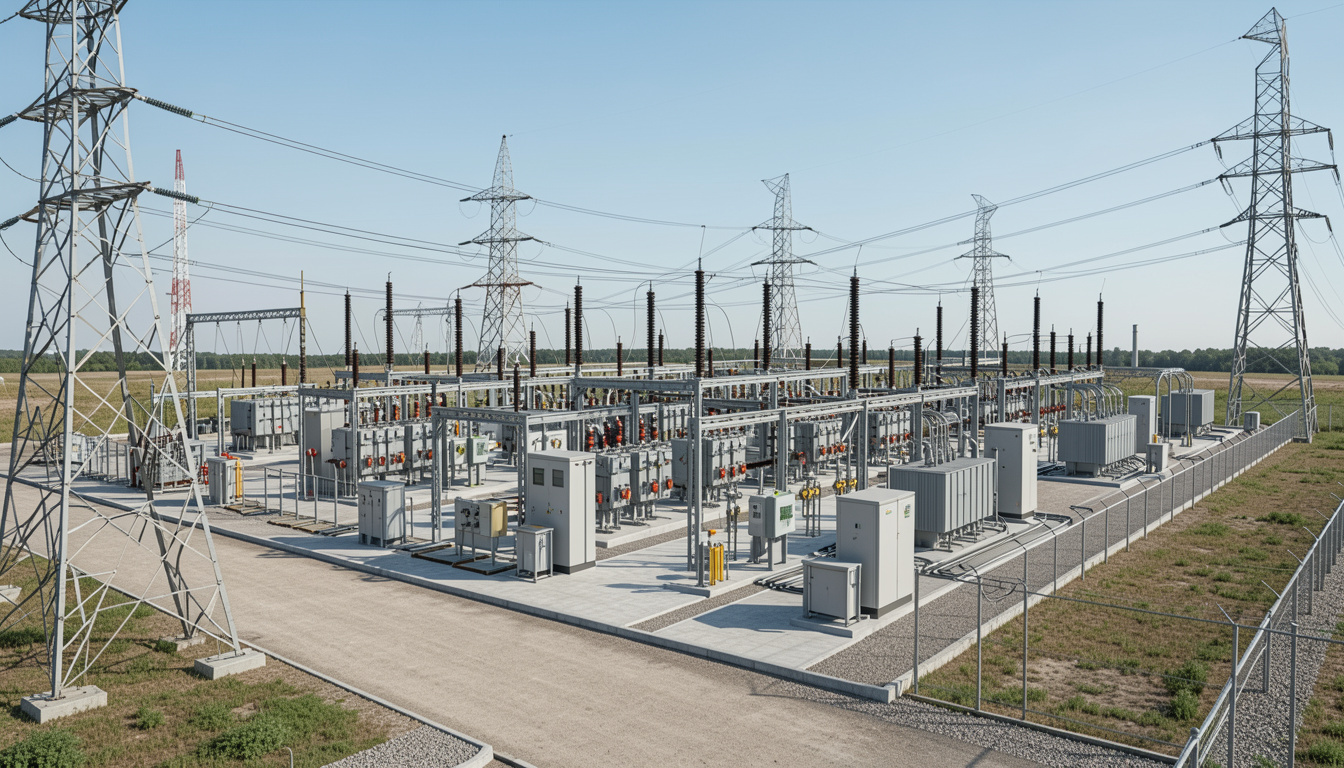
Effective power station design requires careful consideration of both current operating requirements and long-term system performance. A power station must connect effectively to the electrical grid while maintaining appropriate voltage, frequency, protection, and control characteristics.
Professional engineers evaluate the interface between generation equipment and the wider power network. They consider interconnection requirements, transmission connections, transformers, switchyards, protection systems, control systems, and auxiliary services.
The physical design of the station is also important. Equipment must be positioned to support safe operation, maintenance, accessibility, cable routing, cooling, ventilation, and future expansion.
A professionally engineered layout can make maintenance activities easier and reduce unnecessary operational disruptions. It can also help construction teams work more efficiently by providing clear and coordinated design information.
Reducing Project Risk Through Expert Engineering
Complex power projects involve substantial financial investment, long development timelines, and strict technical requirements. Design mistakes discovered during construction can result in delays, change orders, equipment replacement, and increased project costs.
Professional engineering helps reduce these risks by identifying potential problems during the planning and design stages, when changes are generally easier and less expensive to implement.
Experienced engineers also understand the importance of standards, specifications, documentation, quality control, and communication among project stakeholders. They can coordinate technical requirements between owners, contractors, equipment manufacturers, utilities, and other project participants.
The result is a more organized project with clearer technical expectations and fewer surprises during construction and commissioning.
Building Reliable Power Infrastructure for the Future
The energy industry is changing rapidly. Renewable generation, battery energy storage, digital substations, advanced controls, electrification, and increasing electricity demand are creating new engineering challenges.
Professional engineering provides the expertise needed to adapt to these changes while maintaining reliability and safety. Whether developing a new generation facility or upgrading an existing power system, sound engineering decisions remain the foundation of successful infrastructure.
At Keentel Engineering, professional engineering can help project owners and developers approach complex power infrastructure with greater confidence. From the design of power plant systems to comprehensive power plant design and power station design, experienced engineering supports better planning, safer systems, improved reliability, and long-term project value.
Ultimately, professional engineering is not simply about designing equipment or preparing technical documents. It is about understanding how an entire power system should work—and creating an integrated solution that performs reliably today while remaining prepared for tomorrow's energy demands.


 Search in Classifieds
 Search in Groups
 Search in Polls
 Search in Members
 Search in Members
 Search in News
 Search in Businesses
 Search in Contests
 Search in Events
 Search in Music Albums
 Search in Music Songs
 Search in Quotes
 Search in Site Team



Share this page with your family and friends.