Introduction
You open the puzzle, stare at that honeycomb of seven letters, and after a few minutes you're stuck on twelve words wondering if there's a thirteenth hiding somewhere. That's the exact moment most people go looking for todayspellingbeeanswers.com, and honestly, there's no shame in it.
The NYT Spelling Bee is designed to make you second-guess yourself, and sometimes you just want the answer instead of another ten minutes of guessing. Below is the complete breakdown for today's puzzle, letter by letter, word by word, plus the pangram everyone's hunting for.
Today's Letters and the Pangram
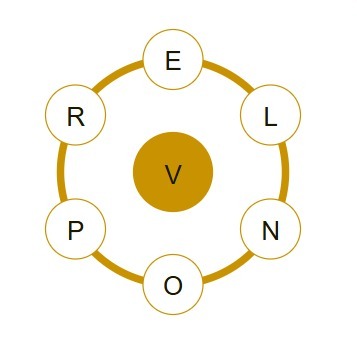
Today's puzzle runs on the letters E, L, N, O, P, R, V, with V sitting in the center. That means every valid word has to include a V somewhere, which trips people up fast because V-heavy words aren't exactly common in everyday speech. The center letter rule is what separates Spelling Bee from a plain anagram solver — you can't just rearrange whatever you like, you're boxed in by that one required tile.
The pangram today is provolone, a sixteen-point word that uses all seven letters and grabs the seven-point pangram bonus on top. It's a cheese, which honestly makes it one of the more satisfying pangrams to land on since it's a word you'd actually use at a deli counter. Finding it early changes the whole run — once you spot provolone, a bunch of the shorter words built from those same letters start suggesting themselves almost automatically.
Full Word List by Length
Here's where people usually get stuck, so let's just lay it all out. The puzzle has forty-one total answers, worth two hundred eleven points at Genius level and split across five different word lengths. Working through them in order, shortest to longest, tends to be the fastest way to fill in gaps you missed.
4-letter words (9 total): even, ever, love, oven, over, rove, veep, veer, vole.
5-letter words (14 total): elver, levee, level, lever, lover, nerve, never, novel, peeve, prove, reeve, revel, rover, verve.
6-letter words (7 total): eleven, evener, evolve, plover, proven, revere, veneer.
7-letter words (6 total): envelop, leveler, popover, reprove, reveler, revolve.
8+ letter words (5 total): envelope, lovelorn, revolver, rollover, and the pangram, provolone.
If you're sitting at, say, twenty-eight words and stuck, check the 5-letter list first — that's where most people leave points on the table. Words like "elver" (a young eel, in case that one threw you) and "reeve" (an old English official title) aren't words you use daily, but the puzzle doesn't care about that. It only cares whether the dictionary backs them.
How the NYT Spelling Bee Actually Works
If you're newer to this puzzle, a quick rundown helps make sense of why the scoring feels the way it does. The New York Times arranges seven letters into a honeycomb shape, and one of them — always the one in the middle — has to appear in every single word you submit. Letters can repeat inside a word as many times as needed, so "level" using two L's and two E's is completely fair game. The catch is that every word needs a minimum of four letters, so no cheap two- or three-letter shortcuts.
A fresh puzzle drops every day at 3:00 AM Eastern, so if you're checking late at night, you're technically racing the clock before a new set of letters replaces the one you're working on. Four-letter words are worth exactly one point regardless of how obscure they are, while anything five letters or longer scores a point per letter. That's why "provolone" is worth so much more than "vole" — length does the heavy lifting once you clear the four-letter minimum.
Ranks climb as your score adds up, starting around Beginner and moving through Good, Solid, Nice, Great, Amazing, and eventually Genius. Genius usually sits around seventy percent of the maximum score, which for today's puzzle lands right around one hundred forty-eight points. Queen Bee, the full clear, means you found every single one of the forty-one words — pangram included.
Missed Yesterday's Puzzle?
It happens more than people admit. Maybe you fell asleep before finishing, or work got in the way and by the time you circled back the new letters were already live.
If yesterday's puzzle is nagging at you, the yesterday's answers archive keeps the previous day's full word list and pangram available so you're not left wondering what you missed. It's a small thing, but going back to check which words you overlooked is genuinely one of the better ways to get sharper at spotting patterns for future puzzles.
Tips That Actually Help You Improve
Chasing hints every day is fine, but if you'd rather start solving more of these yourself, a few habits make a real difference over time. Start by writing out common prefixes and suffixes that pair with the center letter — "re-," "-er," "-ed," and "-ing" unlock a surprising number of words once you get in the habit of testing them.
Also, don't ignore plurals; a lot of players forget that adding an "s" to a valid word usually creates another valid word, and that alone can add several easy points. Another trick worth trying: look for the pangram before anything else. Since it uses every letter at least once, scanning the full set of seven letters for a recognizable root word — even a partial one — often reveals it faster than working bottom-up from short words.
And don't skip the weird ones. Words like "veep" or "reeve" feel obscure, but the Spelling Bee dictionary leans on a broader vocabulary than most players expect, so it pays to guess even when a word sounds slightly off.
Frequently Asked Questions
What is a pangram in the Spelling Bee?
A pangram is a word that uses all seven letters from that day's honeycomb at least once. It earns the normal word score plus a seven-point bonus. Most days have exactly one, though occasionally a puzzle hides two.
How is the NYT Spelling Bee scored?
Four-letter words are worth one point each. Anything longer earns a point per letter, and the pangram tacks on seven extra points. Your rank rises as the total score climbs, from Beginner up to Genius and eventually Queen Bee.
What does Queen Bee mean?
Queen Bee is the top rank, reserved for players who find every valid word in that day's puzzle, pangram included. It's a step above Genius, which only requires around seventy percent of the max score.
When does the puzzle reset?
Every day at 3:00 AM Eastern Time, a completely new set of seven letters replaces the old one, and the previous puzzle moves into the archive.
Do I need a subscription to play?
Yes, playing directly on the official NYT site requires a Games subscription. Answers, hints, and pangrams are still freely accessible on solution pages if you just want to check your work.
What's a Bingo in Spelling Bee?
A Bingo isn't an official NYT rank — it's a self-imposed challenge where you find at least one word starting with each of the seven letters in the puzzle. Some players chase it purely for bragging rights.
Conclusion
Word puzzles like this one work because they sit right at the edge of frustrating and addictive — just hard enough that finishing feels earned. Whether you came here to confirm your last few guesses or to grab the full list outright, today's letters (E, L, N, O, P, R, V) and that provolone pangram should have you covered.
Come back tomorrow when the honeycomb resets, because this puzzle never really gets old, it just gets a new set of letters to wrestle with.


 Search in Classifieds
 Search in Groups
 Search in Polls
 Search in Members
 Search in Members
 Search in News
 Search in Businesses
 Search in Contests
 Search in Events
 Search in Music Albums
 Search in Music Songs
 Search in Quotes
 Search in Site Team



Share this page with your family and friends.