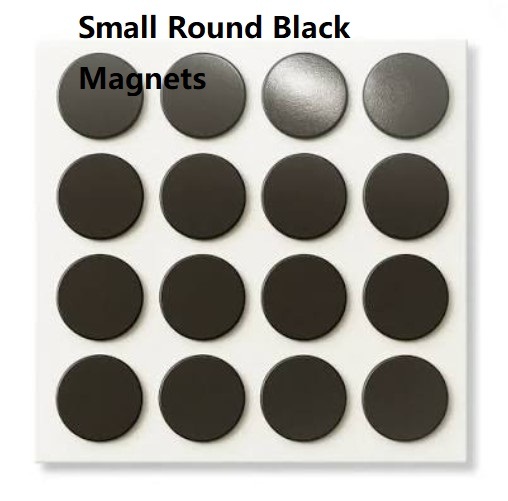
Many everyday products rely on small components to complete important functions, and magnets are a good example. In applications requiring dependable attraction and compact integration, Small Round Black Magnets can support product designs where space is limited and repeated magnetic interaction is needed. From the perspective of manufacturing efficiency, Small Round Black Magnets can also be considered for products requiring standardized components across repeated production batches. Their simple cylindrical form allows designers to evaluate positioning, contact surfaces, and installation requirements with greater clarity. The right choice depends on how the magnet interacts with other parts of the finished product, including the working gap, attracted material, movement frequency, and expected operating environment.
Understanding Magnetic Interaction in Products
A magnet does not work independently from the product around it. Its practical performance is influenced by the size and material of the object it attracts, the distance between surfaces, and the overall assembly design.
This is why product developers should examine the complete magnetic system instead of selecting a component based only on its dimensions. A small change in the working gap, for example, may affect the practical attraction experienced in the finished assembly.
Testing magnets within representative product samples can provide a more realistic understanding of their performance. This allows designers to review opening and closing actions, holding positions, alignment behavior, or other functions before larger-scale production begins.
Such evaluation can also help identify whether the surrounding structure needs adjustment. By considering magnetic interaction early, manufacturers can reduce uncertainty during later assembly stages.
Supporting Repeated Production Requirements
For products manufactured in regular quantities, component consistency can simplify production planning. Using clearly defined magnet specifications makes it easier to establish repeatable purchasing and assembly procedures.
Manufacturers can document important requirements such as diameter, thickness, shape, quantity, and application purpose. These records provide a useful reference when placing future orders or developing related products.
Standardized components can also support inventory organization. Production teams can identify which magnets are used for specific assemblies and plan stock levels according to expected manufacturing schedules.
When a product requires repeated placement of the same component, clear specifications may reduce confusion between similar parts.
Quality checks can also be organized around established requirements. Incoming components may be reviewed according to dimensions and other relevant characteristics before entering the production process.
This creates a more controlled approach to managing components used across recurring production batches.
Mlmagnet for Application-Oriented Selection
Different products create different magnetic requirements. Some applications focus on holding two parts together, while others use magnets for positioning, movement, sensing-related structures, or simple interactive functions.
For this reason, application details should guide the selection process. Manufacturers can begin by defining what the magnet needs to accomplish within the finished product.
The next step is to consider the physical space available for installation. Product structures may limit the diameter or thickness that can be used, making early measurement important.
The attracted material should also be considered. Surface characteristics and the relationship between the two components can influence practical results.
By combining these factors, buyers can create clearer specifications for their projects. This helps connect product design with component purchasing and can make communication during production more efficient.
Designing for Secure Installation
Installation is an important part of magnetic component performance. Even a correctly selected magnet may not function as intended if its position changes during assembly or regular use.
Product designers can review the shape of the installation area and determine how the magnet will be retained. Depending on the application, this may involve a dedicated recess, an appropriate bonding method, or another mechanical arrangement.
Alignment should also be considered when magnets work with another magnetic or metallic component. Accurate positioning can support predictable interaction and help prevent unnecessary movement within the finished product.
For repeated assembly, installation procedures should be easy to follow. Clearly defined positioning steps can help maintain consistency between products.
Manufacturers may also evaluate the assembly sequence to determine when the magnet should be installed. Placing it too early or too late in the process may complicate other operations.
A practical installation plan can therefore support both product performance and production efficiency.
Planning Purchases for Ongoing Projects
Magnet procurement can be more effective when it is connected with production planning. Manufacturers should consider expected product volume rather than treating every purchase as an isolated requirement.
Forecasting regular demand can help purchasing teams prepare for recurring orders and manage inventory more efficiently. At the same time, companies should avoid holding unnecessary stock when product specifications are still changing.
For new projects, sample evaluation can help confirm suitability before committing to larger quantities. Once the design is finalized, documented specifications can provide a stable reference for future production.
Long-term planning should also consider product development. If related products are expected to use similar magnetic components, manufacturers may be able to organize specifications more effectively across different projects.
Compact magnets can support a wide variety of practical product functions, but successful selection depends on understanding the complete application. By evaluating magnetic interaction, repeated production needs, installation methods, and purchasing plans, manufacturers can make better-informed component decisions.
For more information about magnet products and available specifications, visit https://www.mlmagnet.com/. Reviewing your application structure, operating requirements, installation space, and production plans can help you identify suitable options for present manufacturing projects and future product development.


 Search in Classifieds
 Search in Groups
 Search in Polls
 Search in Members
 Search in Members
 Search in News
 Search in Businesses
 Search in Contests
 Search in Events
 Search in Music Albums
 Search in Music Songs
 Search in Quotes
 Search in Site Team


Share this page with your family and friends.