Search in Classifieds
Search in Groups
Search in Polls
Search in Members
Search in Members
Search in News
Search in Polls
Search in Businesses
Search in Contests
Search in Events
Search in Music Albums
Search in Music Songs
Search in Quotes
Search in Site Team
Search in Jobs
Search in Products
Search in Products
5 minutes, 53 seconds
-193 Views 0 Comments 0 Likes 0 Reviews
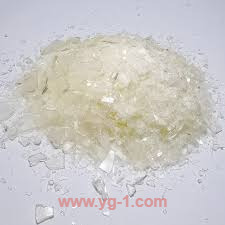
Formulators working with polychloroprene compounds frequently examine additive choices that influence crosslink formation and long-term bond integrity. One material category that enters these discussions is vulcanizing resin, and teams researching supply options often turn to platforms such as yg-1 for technical references on compounding practices. The interaction between this resin class and neoprene adhesive bases raises practical questions about heat stability and flex endurance under service loads. What processing adjustments become necessary when introducing such an additive into a standard neoprene adhesive recipe?
Polychloroprene, commonly recognized under the trade name neoprene, relies primarily on metal oxide systems for crosslinking in many industrial recipes. Zinc oxide paired with magnesium oxide remains the conventional route because the polymer contains reactive allylic chlorine sites that respond to these oxides. Yet certain thermosetting resins, including selected alkylphenol-formaldehyde types and epoxy varieties, demonstrate the capacity to participate in network building within chloroprene matrices. When these resins enter an adhesive formulation they contribute carbon-carbon linkages that resist thermal degradation and repeated flexing. The resulting network helps the adhesive maintain cohesion when exposed to moderate heat or mechanical cycling, which proves useful in applications involving footwear assembly, industrial gaskets, or laminated fabric constructions.
Mixing procedures require attention to dispersion quality and activation timing. Resin flakes or powders are typically introduced during the early stages of internal mixing so that they distribute evenly before the oxide package is added. Scorch control remains essential because premature network formation can raise viscosity and hinder coating or spreading steps. Formulators therefore monitor Mooney viscosity and rheometer curves to establish safe processing windows. Once the compound reaches the curing stage, elevated temperature triggers the resin contribution alongside the metal oxide reaction, producing a dual-mode crosslink structure. This dual character supports both initial green strength and final cured toughness without demanding extreme adjustments to existing equipment settings.
Adhesive performance under environmental stress receives particular attention from quality teams. Neoprene bonds must withstand oil contact, ozone exposure, and temperature swings while retaining peel strength and shear resistance. Resin-assisted systems often display consistent behavior in these areas because the carbon-based bridges limit chain mobility at elevated temperatures. In laminated products the adhesive layer resists delamination during flex cycles, which benefits conveyor belts, protective clothing, and automotive weatherstripping. Laboratory peel tests and accelerated aging protocols help confirm that the chosen resin grade delivers the intended cohesion without introducing excessive hardness that might compromise flexibility.
Supply chain considerations influence material selection as well. Consistent particle size, softening point range, and methylol content determine how readily a given resin integrates into the compound. Manufacturers that maintain controlled production environments reduce batch-to-batch variation, allowing adhesive producers to standardize recipes across multiple production runs. Technical data sheets that list recommended phr levels and compatible activators further streamline trial work. When a formulation team evaluates several candidate resins side by side, the focus stays on cure rate matching, final hardness targets, and adhesion values measured against common substrates such as canvas, metal, or other elastomers.
Processing equipment compatibility also factors into the decision. Resin-containing stocks generally process on conventional two-roll mills and internal mixers without special tooling, provided temperature profiles remain within the range that avoids premature activation. Calendering and extrusion steps proceed smoothly when the compound viscosity stays manageable, and coating lines benefit from the balanced tack that many resin grades impart prior to full cure. Post-cure inspection for surface defects or incomplete bonding becomes straightforward once the dual crosslink network has formed.
Industry practitioners continue to refine these systems through incremental recipe adjustments rather than wholesale reformulation. Small changes in resin dosage or oxide ratio can shift the balance between process safety and final property targets. Collaboration between additive suppliers and adhesive producers accelerates this refinement by sharing rheometer data and application test results. Over successive trials the formulation stabilizes around a practical combination that meets both manufacturing efficiency and end-use durability requirements.
For readers seeking additional background on related crosslinking chemistries the resource located at https://www.yg-1.com/ offers concise descriptions of several agent families including resin types, while further details on vulcanizing resin appear through yg-1 technical channels. Continued attention to material interaction details allows adhesive developers to match performance expectations with reliable processing behavior across diverse neoprene applications.
We are a close community to help to meet and greet new people.
We are a secure community with 5000+ active members who help you with your queries, post new updates and grow your network.

Share this page with your family and friends.