What Are Custom Green Gable Boxes?
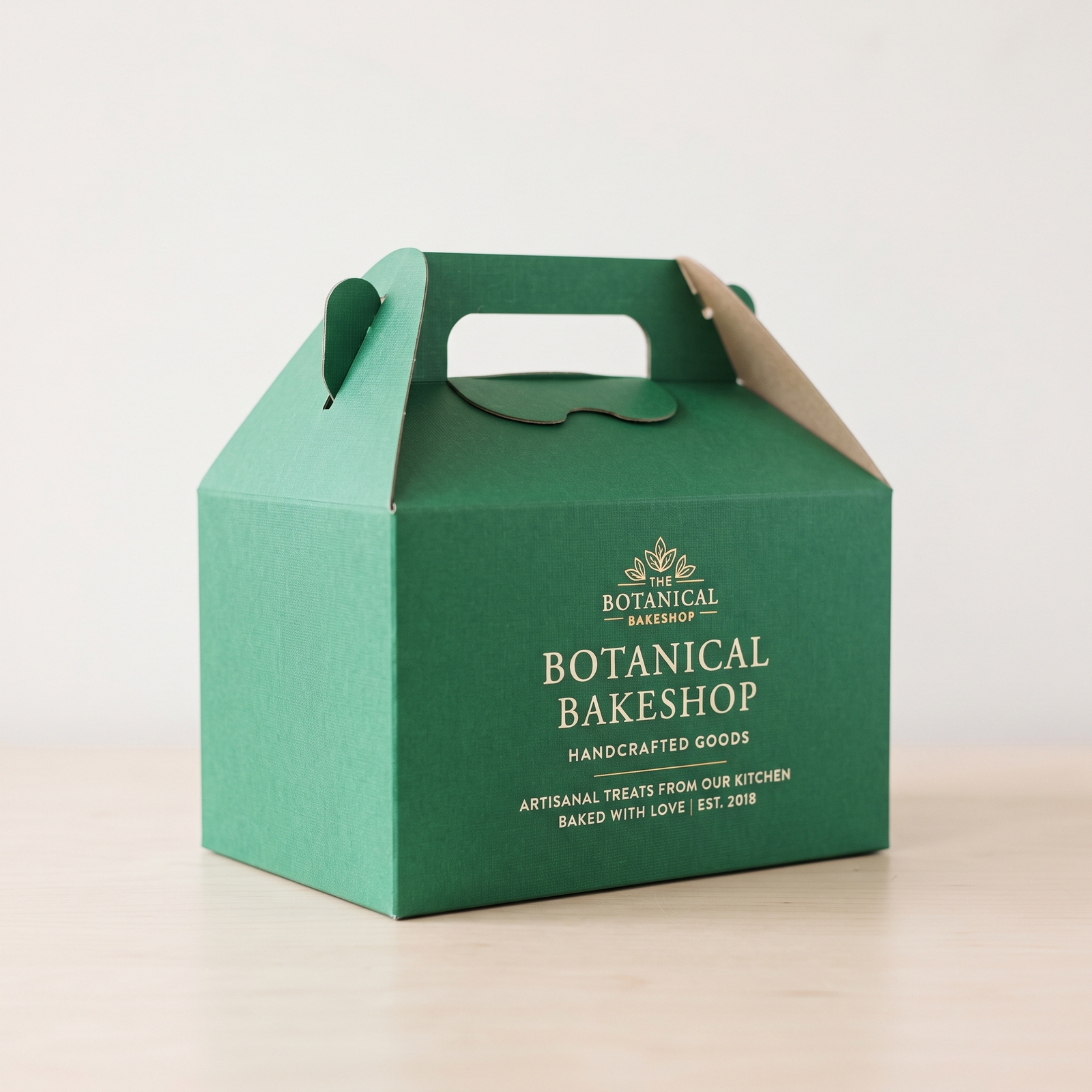
Custom green gable boxes use a gable-style shape with a handle at the top. A box can fold from a flat sheet into a container with a built-in handle. This design can work for food, gifts, party items, bakery products, and other goods.
Gable packaging can make carrying easier because a handle form as part of box structure. No separate handle may be needed. Box size, board type, print, and closure can change based on product needs.
Product measurement should come before box design. Measure length, width, and height of an item. Add space for tissue, paper, inserts, or food protection where needed. Correct measurement can help avoid a box that feel too tight or leave too much empty space.
A flat box can also save storage room before assembly. Staff can fold panels along score lines when packing work start. This can help businesses store packaging without use large storage areas.
How Green Gable Box Design Works
Gable box design use folded panels that create side walls, a base, and a top handle. During assembly, panels fold along scored lines. Top sections come together to form a handle and close box.
Score placement need follow a correct template. Poor scoring can make folding harder or cause weak points. Box panels should align after folding so base remain stable.
Handle size also matter. A handle need enough strength to carry product weight. A box used for light bakery goods may need different board support than a box used for heavier gifts.
A physical sample can help test box structure. Place a product inside, close top section, and lift box by handle. Check base support and handle strength before approve large production.
Choosing Kraft Packaging Material
Kraft packaging can provide a paper-based option for gable box production. Kraft board can work for many food, gift, and retail products when board thickness match product weight.
White paperboard can also work when a business need printed graphics, product details, or brand information. Material surface can affect print result, so sample testing can help confirm final appearance.
Board thickness should follow product use. Light food or gift items may need less board. Heavy products may need stronger material to support weight during carrying and transport.
Businesses should also consider storage conditions. Paper packaging can react to moisture, so storage area should remain dry when possible. Food products may also need suitable food-contact material based on product use.
Material choice can affect cost as well. Using more board than needed may raise packaging cost. Using weak board can increase risk of damage. A balance between strength, size, and cost can help guide material choice.
Green Gable Boxes for Food and Gifts
Custom green gable boxes can work for food packaging and gift packaging. Bakeries can use gable boxes for cookies, cupcakes, pastries, and other food items when box material meet food packaging needs.
Gift businesses can use this box style for small gifts, party favors, handmade goods, and event items. A handle can allow customers to carry a packed gift without need for a separate bag.
Food packaging need special attention to material. Direct food contact may require suitable board or an inner barrier. Businesses should confirm material details before use for food.
Product weight also matter. A box holding several food items may need stronger board than a box holding one light item. Product size and weight should guide box dimensions.
Gable box design can also help during events. Businesses can use printed packaging for birthdays, weddings, parties, company events, and other occasions. A printed name or message can provide useful event information.
Handle Design and Product Carrying
Handle design form an important part of gable packaging. A handle should have enough board support to carry expected product weight. A weak handle can bend or tear during use.
Handle width and panel shape can affect carrying comfort. A business should test a sample with a product inside before production begin.
Weight should also stay balanced inside a box. A product placed heavily on one side can place extra pressure on handle and box panels. Inserts or internal paper support can help keep products in place.
Businesses can test handle strength by lift a packed sample several times. Check handle edges, folds, and connection points after testing.
For heavier goods, another box style may provide better support. Gable design work best when product weight match box structure and board strength.
Printing and Brand Information
Custom green gable boxes can provide space for brand information on front, side, and handle panels. A business can print logo, product name, website details, contact information, or event message.
Food businesses may also need space for ingredients, product details, storage information, or other required information. Text should remain easy to read after box assembly.
Print placement should follow box template lines. Important text should not sit close to folds or cutting areas. A logo placed across a fold may lose part of its design after assembly.
Businesses should check spelling, numbers, contact details, and product information before print approval. A sample can help show how graphics appear after folding.
Simple design can make customer information easier to find. Too much text can make packaging hard to read. Clear spacing can help keep useful details easy to understand.
Choosing the Right Box Size
Box size should match product dimensions. Start by measure length, width, and height. Add room for padding, tissue, inserts, or other material when needed.
A box that feel too tight can place pressure on a product. A box with too much empty room can allow movement during carrying or delivery.
Handle height should also be part of box planning. A product should sit at a safe distance below handle area. Correct placement can help reduce pressure on top of product.
Storage space can also affect size choice. Large boxes can take more room before assembly and after packing. Right-size packaging can help businesses use storage space in a better way.
A sample can confirm final dimensions. Place product inside, fold box, close handle area, and carry sample by handle. Check product movement and box shape before approve production.
Product Safety During Storage and Delivery
Packaging can help protect products from dust, pressure, movement, and handling. During delivery, boxes may face stacking and shifting. Product type should guide internal support.
Food items may need paper liners or inserts based on product needs. Fragile gifts may need tissue or cardboard support. Small products may need an insert to prevent movement.
Box board should also match expected handling. A thin board may work for a light item but may fail when carrying a heavy product.
Storage conditions should also receive attention. Keep paper boxes away from water and high moisture where possible. Moisture can weaken board and affect box shape.
Businesses can perform a simple delivery test before production. Pack a sample, carry box, place it with other packages, and check box condition after handling.
Eco-Friendly Packaging Options
Paper-based gable packaging can provide an option for businesses that want reduce plastic use. Kraft board and recyclable paperboard can work for many products when material strength match product needs.
Right-size packaging can also reduce unnecessary material. A box that fit product can need less filler than an oversized box.
Reusable use can also depend on box structure. A strong gable box may allow customers to use packaging again for storage or carrying small items.
Businesses should confirm recycling information before place environmental claims on packaging. Local recycling rules can differ, and material type can affect disposal.
Reducing extra inserts, selecting suitable board, and using correct dimensions can help limit unnecessary packaging material.
Packaging Castle and Custom Box Support
Packaging Castle provide packaging options for businesses that need box size, material, print, and structure based on product needs. Custom green gable boxes can provide a useful format for food, gifts, events, bakery products, and retail goods.
Businesses can share product measurements, expected weight, material needs, print requirements, and order quantity before production. Such details can help guide box planning.
A sample can also help confirm handle strength, product fit, folding, print placement, and base support before a large order begin.
Good packaging start with correct measurements and suitable material. Product weight, carrying needs, storage conditions, and customer use should guide box selection.
Gable box structure can provide both packaging and carrying support in one format. With proper planning, businesses can use this box style to pack products, share brand information, and make carrying easier. Packaging Castle can help businesses review these needs and plan a box based on product requirements.


 Search in Classifieds
 Search in Groups
 Search in Polls
 Search in Members
 Search in Members
 Search in News
 Search in Businesses
 Search in Contests
 Search in Events
 Search in Music Albums
 Search in Music Songs
 Search in Quotes
 Search in Site Team



Share this page with your family and friends.