Kitchen Utensils are part of almost every cooking environment, yet the convenience of a spoon, whisk, scraper, brush, tong, or other cooking accessory depends on a manufacturing process that is rarely noticed by the person using it. Product shape, material selection, surface condition, edge treatment, cleaning requirements, and finishing quality all influence how a utensil feels and functions during daily preparation. For manufacturers, these details can involve repeated cutting, forming, polishing, brushing, trimming, or surface treatment operations, creating opportunities for specialized machinery. automaticmachinefactory, operated by Yongkang Tarun Technology Co., Ltd., focuses on metal processing machinery, industrial automation equipment, brush-making machinery, abrasives, polishing materials, and related industrial products. So, how can machinery connected with these processes contribute to the production of practical cooking tools?
From Raw Material to Usable Kitchen Products
A kitchen utensil usually begins with a material that must be transformed into a specific shape. Stainless steel sheets may require cutting and forming, wire may need bending, and metal components can require trimming or surface treatment before assembly. The final product may appear simple, but several mechanical operations can sit behind its finished appearance.
Automation becomes useful when a manufacturing process contains repeated movements that can be organized into a defined sequence. A wire component, for example, may need to reach a particular shape several times during one production batch. A dedicated bending machine can handle the forming stage while operators supervise material feeding, adjustments, inspection, and subsequent processing.
This type of production logic is not limited to one category of household goods. The same principles can support hardware accessories, cleaning tools, brush components, and various metal products that share similar processing requirements.
Why Surface Treatment Matters
The surface of a cooking accessory has an important relationship with its practical use. A metal component may require removal of burrs, oxidation, residue, or unwanted surface material before it reaches a finishing or assembly stage. Brushing and polishing can therefore become part of the manufacturing route rather than an isolated operation.
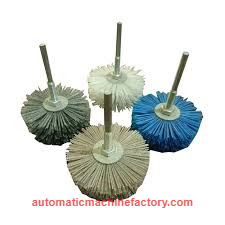
Wire brushes are commonly used for cleaning, rust removal, polishing, and surface preparation, with different brush structures suited to different workpieces. Tarun's product information describes curved wire wheel brushes and other brush forms for surface cleaning and treatment applications.
For manufacturers working with metal cooking accessories, this type of surface preparation can be relevant during fabrication, finishing, maintenance, or preparation for a subsequent coating process. The exact method depends on the workpiece material, surface condition, desired finish, and production sequence.
The Role of Brush Manufacturing Equipment
Brushes themselves also require specialized production equipment. When a factory produces wire-based cleaning or surface-treatment tools, operations such as wire cutting, bending, twisting, trimming, and forming can become highly repetitive. Machinery designed around these stages can organize the process and provide controlled mechanical movement.
Tarun's brush-making machinery range includes wire bending machines, automatic wire cutting machines, curved wire trimming machines, curved wire brush segment machines, and steel wire automatic brush machines. These machines are relevant to the production of industrial brushes used in cleaning and surface treatment, which can in turn support manufacturing environments where metal utensils and household hardware are processed.
The connection is therefore indirect but practical. The machinery does not need to manufacture a spoon or pan itself to contribute to a kitchen-product supply chain. It can produce the brushes used to clean, prepare, or finish metal components, or manufacture brush products intended for household and commercial cleaning tasks.
How Automation Can Support Repetitive Operations
Repetitive manufacturing tasks can involve small variations when they depend entirely on manual handling. Feeding, positioning, bending, cutting, and trimming are examples where machine-assisted processing can establish a defined movement pattern.
For factories, equipment selection should begin with the operation rather than the machine name. The manufacturer needs to understand the raw material, dimensions, required shape, production sequence, available space, and inspection method before deciding how automation should be introduced.
Tarun's official information states that its R&D team can develop and produce machinery according to customer drawings or samples, while its FAQ explains that customized products are part of its manufacturing activity. This approach is relevant when a standard machine does not correspond closely with a particular production route.
For example, a factory handling wire components for household products may require a certain bending pattern, while another manufacturer may need a different cutting length or brush configuration. Treating the actual production requirement as the starting point allows technical communication to focus on material behavior and processing conditions instead of relying solely on a standard catalog description.
Choosing Equipment Around the Product
The design of a kitchen accessory can influence every preceding manufacturing decision. A thin metal edge may require one finishing method, while a thicker formed component may require another. A wire handle, cleaning brush, or spring-like component may require controlled bending, whereas a flat metal part may need cutting, punching, forming, and surface preparation.
Manufacturers should therefore examine the complete route from incoming material to finished component. Material feeding, forming, joining, brushing, polishing, inspection, and packaging can be viewed as connected stages rather than separate purchases. Such planning can also clarify where automation is useful and where skilled manual intervention remains appropriate.
Equipment maintenance deserves attention as well. Brush-making machinery and metal-processing equipment depend on correct setup, routine inspection, and suitable replacement of worn components. Tarun's service information describes technical consultation, installation guidance, operation training, and after-sales support as part of its customer service approach.
A Manufacturing Link Between Cooking Tools and Industrial Equipment
The everyday simplicity of Kitchen Utensils can hide a surprisingly varied manufacturing chain. A finished cooking tool may involve metal forming, wire processing, surface preparation, polishing, cleaning, assembly, and packaging, while supporting tools such as industrial brushes may require their own dedicated production equipment.
For manufacturers exploring this connection, automaticmachinefactory offers machinery categories covering wire processing, brush production, metal processing, automation, abrasives, and polishing-related applications. The practical question is how a particular machine fits the material and workflow rather than whether automation should be applied simply because it is available.
When a production project involves metal preparation, wire components, brush manufacturing, or surface treatment related to household products, the equipment information available through https://www.automaticmachinefactory.com can serve as a technical reference, while drawings, samples, material specifications, and processing requirements can help automaticmachinefactory and the TARUN team understand the intended application of the machinery.


 Search in Classifieds
 Search in Groups
 Search in Polls
 Search in Members
 Search in Members
 Search in News
 Search in Businesses
 Search in Contests
 Search in Events
 Search in Music Albums
 Search in Music Songs
 Search in Quotes
 Search in Site Team




Share this page with your family and friends.