Search in Classifieds
Search in Groups
Search in Polls
Search in Members
Search in Members
Search in News
Search in Polls
Search in Businesses
Search in Contests
Search in Events
Search in Music Albums
Search in Music Songs
Search in Quotes
Search in Site Team
Search in Jobs
Search in Products
Search in Products
5 minutes, 56 seconds
-173 Views 0 Comments 0 Likes 0 Reviews
A workshop owner stares at a steel gate. Rust covers the lower half. Old paint peels along the top rail. A wire brush has scarred the metal in past jobs. A sanding disc has clogged within minutes. The owner then hears about a softer option and asks a plain question: can a Non-Woven Fiber Wheel strip rust and paint without gouging the steel beneath? That question matters to any shop that repairs trailers, gates, or machine frames. It also matters to the plants that make these wheels. Automaticmachinefactory, run by TARUN, builds Non-Woven Fiber Wheel Production Equipment for the abrasives trade. The firm also makes grinding tools, molds, and automation gear. So how does a fiber wheel lift old coatings while sparing the base metal?
TARUN works in research, development, manufacturing, and sales of metal processing machinery. Its lines cover industrial automation equipment, hardware tools, power tools, pneumatic tools, abrasives, polishing materials, and insulating materials. Its automation division supplies CNC systems, molding machines, and grinding lines. Its grinding and abrasives division supplies wheels, discs, belts, and pads. That mix lets a buyer source both the finished wheel and the machine that makes it. A plant can then control grit, density, and bond in house.
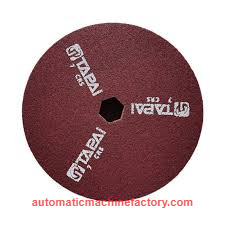
A non-woven fiber wheel is a mat of nylon fibers. Abrasive grain sits throughout the web. A resin bond holds the grain in place. The open structure lets air pass and stops the wheel from loading up. That open web is why the wheel lifts rust and paint without tearing the steel. A wire brush digs in and leaves scratches. A fiber wheel rides over the surface and cuts the coating alone. The grain does the work. The fiber holds the grain and cushions the cut.
Grit choice sets the speed and the finish. A coarse grain cuts fast and leaves a dull surface. A fine grain cuts slow and leaves a smooth surface. A shop that strips heavy rust may start coarse. A shop that preps for paint may finish fine. A buyer can pick a wheel to match the job. A maker that runs its own line can tune the grit and the web density for a target market.
Speed and pressure also shape the result. A wheel run too fast may burn the surface. A wheel run too slow may polish instead of cut. A light touch lets the grain cut. Heavy force presses the web flat and dulls the cut. An operator who learns the feel gets a clean strip in one pass. That skill cuts labor and saves wheels.
The machine behind the wheel matters too. A production line must blend fiber, grain, and resin in set ratios. It must press the web to a set density. It must cure the bond at a set heat. A weak line makes wheels that shed grain or wear fast. A sound line makes wheels that hold their shape. TARUN builds these lines with control systems that hold each step steady. A buyer can then trace each batch.
Safety also enters the shop. A fiber wheel throws less spark than a wire brush. It also makes less noise. That calm helps in closed bays and in shops near homes. An operator still needs a guard, a face shield, and eye protection. A dust mask helps when paint dust fills the air. A buyer should check the wheel's rated speed before mounting it.
Cost ties to all of these points. A cheap wheel may wear out in a short run. A sound wheel may last through many jobs. A shop that strips often gains from a steady supply. A plant that makes its own wheels gains control over cost and quality. That control pays back over a full product line.
Stripping old coatings without harming the base metal comes down to matching the abrasive to the surface and the machine to the output goal. The page https://www.automaticmachinefactory.com/ shows Non-Woven Fiber Wheel Production Equipment from Automaticmachinefactory by TARUN. The specs and the build sit open for review. A buyer can line up a wheel with the daily work and a line with the output target. Does a maker that builds both the tool and the machine earn your trust for the next job?
We are a close community to help to meet and greet new people.
We are a secure community with 5000+ active members who help you with your queries, post new updates and grow your network.

Share this page with your family and friends.