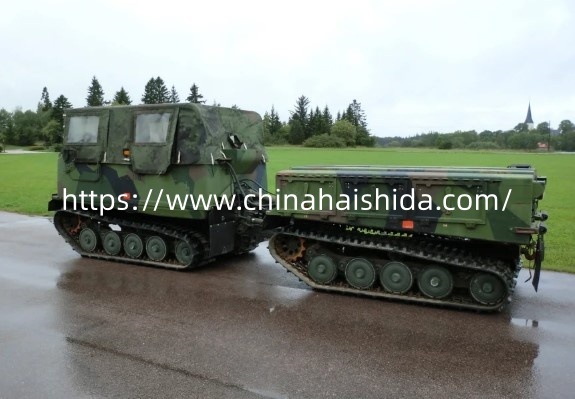
Specialized mobility equipment is often required when materials, tools, people, or other loads need to move through environments that are difficult for conventional vehicles. For organizations evaluating a Tracked Carrier, the selection process should be based on the complete working scenario rather than mobility alone. Material selection, purchasing considerations, functional engineering, technology, user experience, maintenance, and appearance all influence how naturally a tracked carrier fits into a demanding operation.
Material choice provides the basis for the vehicle's structure and long-term usability. A tracked carrier may combine a chassis, body panels, track assemblies, suspension elements, storage structures, protective sections, seating areas, and equipment interfaces. Manufacturers need to consider structural stability, corrosion resistance, impact behavior, wear resistance, surface protection, and compatibility between different materials.
Environmental exposure can have a strong influence on these decisions. Tracked carriers may operate on muddy trails, wet ground, rocky paths, snow-covered terrain, forest routes, agricultural land, or construction sites. These conditions can expose vehicle components to moisture, dust, debris, vegetation, and repeated cleaning. Material selection should therefore reflect the environment in which the vehicle will actually be used.
The relationship between rubber, metal, polymer, electrical, and composite components is also important. Track assemblies interact continuously with wheels, rollers, suspension components, and drive mechanisms. Body structures may connect with storage systems, protective equipment, or external accessories. Engineers can review these relationships during development to create a more coordinated vehicle structure.
Purchasing decisions should begin with the specific task the vehicle is expected to perform. A carrier used for remote material movement may have different priorities from one supporting forestry work, agricultural activity, emergency response, construction, infrastructure maintenance, or outdoor services. Buyers can consider terrain, access conditions, cargo organization, operator movement, maintenance routines, storage, transportation, and compatibility with existing equipment.
Cargo management is particularly relevant for a carrier vehicle. Tools, supplies, equipment, and other materials need to remain organized while the vehicle moves across changing terrain. Buyers can examine storage arrangements, loading access, securing methods, and the relationship between the cargo area and the rest of the vehicle. Practical organization can make daily operations easier while reducing unnecessary movement around the platform.
Supplier evaluation should be part of the purchasing process as well. Buyers can examine manufacturing experience, engineering communication, vehicle-development capabilities, quality management, material knowledge, customization flexibility, production organization, and customer responsiveness. A supplier with experience in specialized mobility equipment can provide more useful input when customers are developing a vehicle around a particular operating environment. LIN HAI HAISDER MACHINERY CO., LTD. brings practical vehicle-manufacturing experience to different off-road and utility applications.
Functional engineering determines how effectively the carrier connects mobility with transportation work. Designers need to coordinate the chassis, tracks, suspension, propulsion system, steering, body structure, cargo areas, protective elements, and equipment interfaces. Each part should support the overall purpose of the vehicle without creating unnecessary conflicts with other systems.
Terrain interaction is a central engineering consideration. Track geometry, suspension coordination, ground contact, drive engagement, and weight distribution all influence how a carrier responds to uneven surfaces. Engineers can study the relationship between these systems so the vehicle remains controllable and predictable across different operating conditions.
Access also matters. Operators may need to enter the vehicle, load materials, inspect equipment, reach service areas, or remove debris after working in difficult terrain. Designers can consider doors, steps, handholds, storage openings, covers, and maintenance access as part of the vehicle's functional layout rather than adding them after the primary structure is completed.
Technology supports this development process from concept to manufacturing. Digital modelling allows engineers to review chassis geometry, track positioning, suspension relationships, cargo areas, protective structures, and operator access before physical production begins. Virtual design review can help identify potential interference while changes are still easier to coordinate.
Manufacturing technology then brings the concept into physical form. Cutting, machining, welding, forming, moulding, coating, assembly, electrical integration, and inspection may all contribute to the finished vehicle. Coordinating these processes helps manufacturers maintain consistency while allowing product concepts to be adapted for different operating requirements.
Quality management provides another important layer of control. Material inspection, structural checks, track evaluation, assembly review, surface inspection, electrical verification, and final quality assessment can help identify inconsistencies throughout production. Information from field use and customer feedback can then support future design refinement.
User experience is shaped by how naturally the vehicle supports the operator's routine. Drivers and operators may need to navigate uneven terrain, monitor surroundings, load cargo, access controls, clean the machine, and prepare it for another task. Logical layouts and accessible working areas can reduce unnecessary effort during these activities.
Maintenance is especially important for off-road carriers. Mud, sand, stones, vegetation, water, and debris can accumulate around tracks, undercarriage components, body structures, and storage areas. Designers can consider cleaning access, inspection points, removable protective elements, and service-friendly arrangements so routine maintenance remains manageable.
Handling and transportation between locations can also influence usability. Specialized vehicles may need to move between work sites or remain in storage before another assignment. Practical access points, protective components, organized equipment spaces, and manageable preparation procedures can simplify these transitions.
Comfort can influence the experience where passengers or operators spend extended periods inside the vehicle. Seating, back support, handholds, entry areas, visibility, and interior organization should work together. A functional carrier can still provide a more comfortable working environment when physical interaction is included in the design process.
Design and appearance contribute to the overall identity of a tracked carrier. Body contours, track proportions, protective panels, windows, storage structures, surface finishes, and color choices influence how the vehicle appears as a complete machine. A coordinated design can make the carrier look purposeful while maintaining its practical character.
Visual organization can also support operational clarity. Clearly arranged controls, access areas, cargo spaces, protective elements, and service points may help operators and technicians understand the machine more easily. Industrial design therefore has a relationship with usability, inspection, and maintenance as well as visual appeal.
Customization gives customers flexibility when standard vehicle concepts do not fully match their applications. Forestry operators, agricultural businesses, emergency organizations, construction companies, utility providers, outdoor-service companies, distributors, and equipment brands may have different requirements for cargo arrangements, seating, protection, storage, equipment integration, or access systems. Flexible engineering allows manufacturers to adapt these elements while keeping production coordinated.
Sustainability can also become part of tracked-carrier development. Manufacturers may consider efficient material usage, reduced fabrication waste, repair-friendly structures, reusable packaging, component refurbishment, and longer service life. These considerations can be integrated into engineering without separating resource efficiency from practical vehicle development.
Customer feedback remains valuable throughout the product lifecycle. Operators, mechanics, fleet managers, distributors, and service teams may provide insight into terrain handling, cargo organization, cleaning, access, maintenance, comfort, and transportation. Manufacturers can use this experience to refine future vehicle designs and production processes.
LIN HAI HAISDER MACHINERY CO., LTD. continues developing specialized mobility products through practical engineering knowledge, manufacturing experience, flexible product development, and attention to demanding outdoor applications. Its approach connects materials, chassis construction, tracked mobility, cargo organization, operator access, technology, maintenance, comfort, customization, and visual design throughout the product-development process. More information about its products and manufacturing capabilities is available at https://www.chinahaishida.com.


 Search in Classifieds
 Search in Groups
 Search in Polls
 Search in Members
 Search in Members
 Search in News
 Search in Businesses
 Search in Contests
 Search in Events
 Search in Music Albums
 Search in Music Songs
 Search in Quotes
 Search in Site Team



Share this page with your family and friends.