Search in Classifieds
Search in Groups
Search in Polls
Search in Members
Search in Members
Search in News
Search in Polls
Search in Businesses
Search in Contests
Search in Events
Search in Music Albums
Search in Music Songs
Search in Quotes
Search in Site Team
Search in Jobs
Search in Products
Search in Products
6 minutes, 50 seconds
-49 Views 0 Comments 0 Likes 0 Reviews
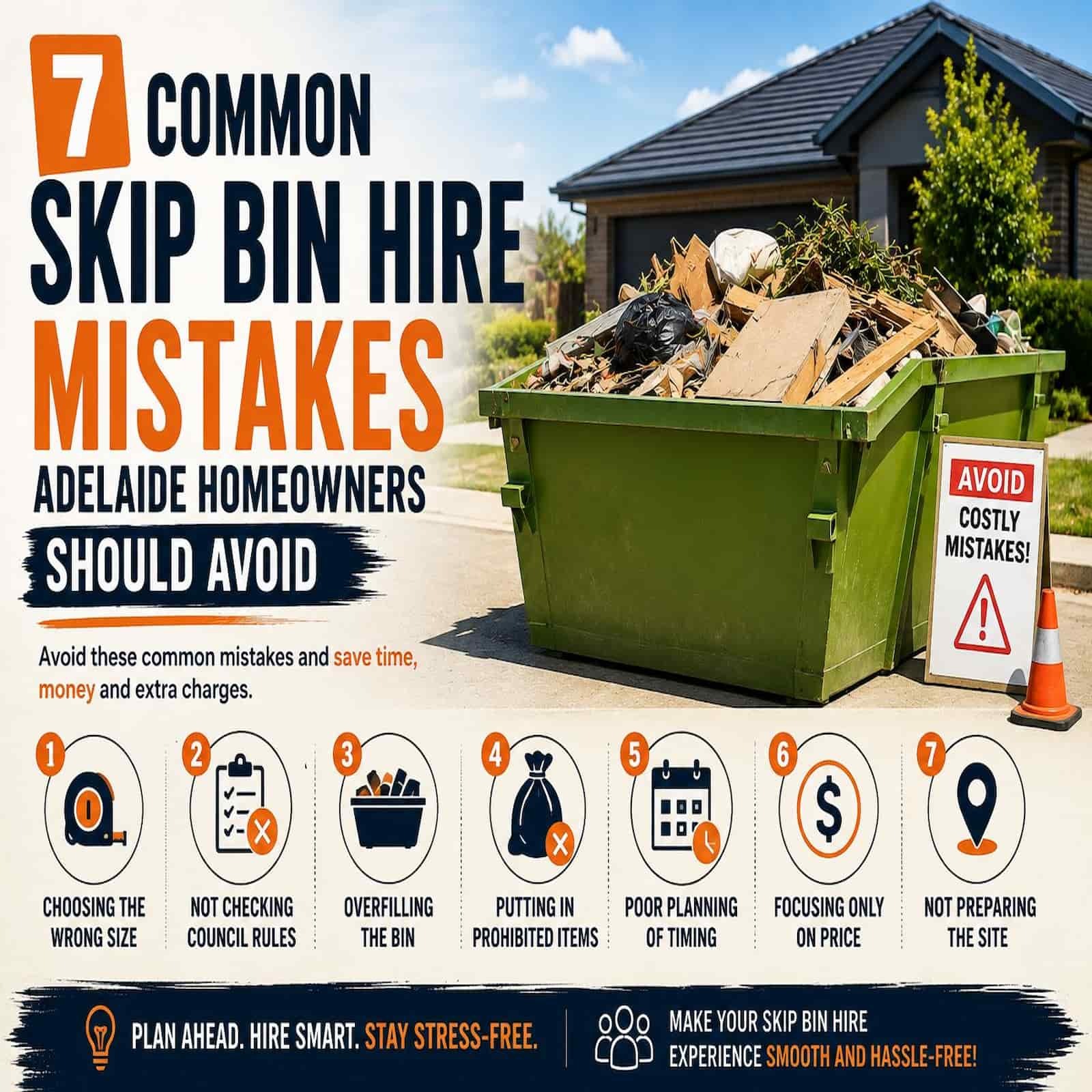
Hiring a skip bin feels like one of the simpler parts of a home cleanup or renovation project, but plenty of Adelaide homeowners end up paying more than they expected, or dealing with unnecessary delays, because of a handful of genuinely avoidable mistakes. Here's a rundown of the most common ones, and how to sidestep them before you book.
This is easily the most common mistake, and it cuts both ways. Booking a bin too small means you're either paying for a second delivery or awkwardly overloading the one you've got. Booking too large means you've paid for capacity you never actually used. Being honest about your project's genuine scale, a small garden cleanup versus a full renovation, before booking saves both money and hassle.
Skip bin categories exist for a reason. Putting green waste, general household items, and construction debris all into the same bin without checking the category restrictions genuinely leads to extra fees or complications when the load reaches a disposal facility. General waste, green waste, heavy mixed waste, and masonry materials all need to be kept within their appropriate categories, since mixing them incorrectly is one of the fastest ways to rack up unexpected charges.
Certain materials, liquids, chemicals, asbestos, food waste, are prohibited across virtually every skip bin category, yet they're commonly the source of confusion and unexpected fees. Assuming "it's just rubbish, it'll be fine" without checking the specific restrictions for your booked category is a mistake that catches out even experienced renovators.
Items like tyres and mattresses aren't outright banned in most categories, but they do typically come with an additional per-item fee. Forgetting to account for this, or assuming they're included in your standard booking price, leads to a surprising final bill that could have been anticipated with a quick check beforehand.
Skip bins are typically delivered to a driveway, but not every property has straightforward access for a delivery truck. Narrow streets, low-hanging branches, or restricted driveway space can all complicate delivery if it's not communicated in advance. Confirming placement details and access requirements when booking prevents delivery delays or last-minute complications on the day.
Standard hire periods typically run around seven days, and if your project runs longer than expected, common with renovations, that extension usually comes with an additional daily charge. Underestimating your realistic timeline and needing to extend last minute costs more than simply booking a more accurate hire period from the outset.
Choosing the first skip bin provider you come across without comparing pricing, waste category options, and service reliability can mean missing out on better value or more suitable options elsewhere. A quick comparison of what's actually included, delivery timing, category flexibility, recycling practices, often reveals meaningful differences between providers.
Individually, these mistakes might seem minor, an extra fee here, a slightly awkward delivery there. But together, they genuinely add up, turning what should be a straightforward, cost-effective waste solution into a more expensive, frustrating experience than it needed to be. Avoiding them from the outset is simply a matter of a bit of upfront planning.
Assess your project honestly before choosing a size. Consider the actual volume of waste you're generating, not just a rough guess, and check available options against your specific needs.
Confirm your waste category matches your project. Reviewing a complete guide to skip bin waste types before booking ensures you're selecting the right category rather than assuming general waste covers everything.
Ask about extra-charge items upfront. If you know you're disposing of tyres or a mattress, confirm the additional cost before booking rather than being surprised later.
Communicate access requirements clearly. Let your provider know about narrow driveways, low branches, or other access considerations when you book.
Book a realistic hire period. If there's any chance your project might run longer than a standard week, factor that into your initial booking decision.
Compare a few providers. Checking available skip bin sizes and pricing options across a couple of local providers helps confirm you're getting genuine value rather than settling for the first quote you receive.
Most skip bin hire mistakes come down to a lack of upfront planning rather than anything genuinely complicated. Choosing the right size, understanding your waste category restrictions, accounting for extra-charge items, and confirming access and timeline details before booking will save Adelaide homeowners from unexpected fees and unnecessary hassle. A few minutes of preparation before you book genuinely makes the entire skip bin hire experience considerably smoother from delivery through to collection.
We are a close community to help to meet and greet new people.
We are a secure community with 5000+ active members who help you with your queries, post new updates and grow your network.

Share this page with your family and friends.